Feeling pain behind knee can make ordinary activities such as walking, climbing stairs, bending your leg, or getting up from a chair uncomfortable. In many cases, the problem comes from an irritated muscle, tendon, or joint structure. However, swelling behind the knee can also develop from a Baker’s cyst, while sudden pain with calf swelling can sometimes signal a more serious problem such as a blood clot. Therefore, the surrounding symptoms matter just as much as the location of the pain.
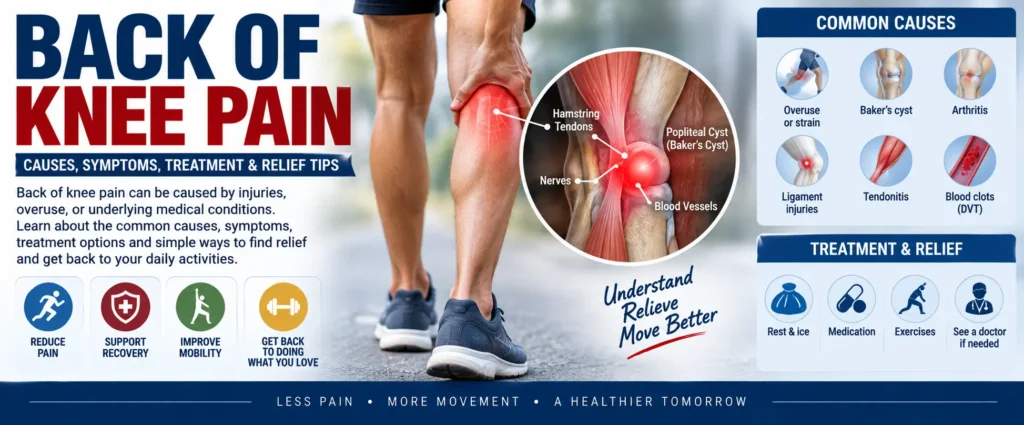
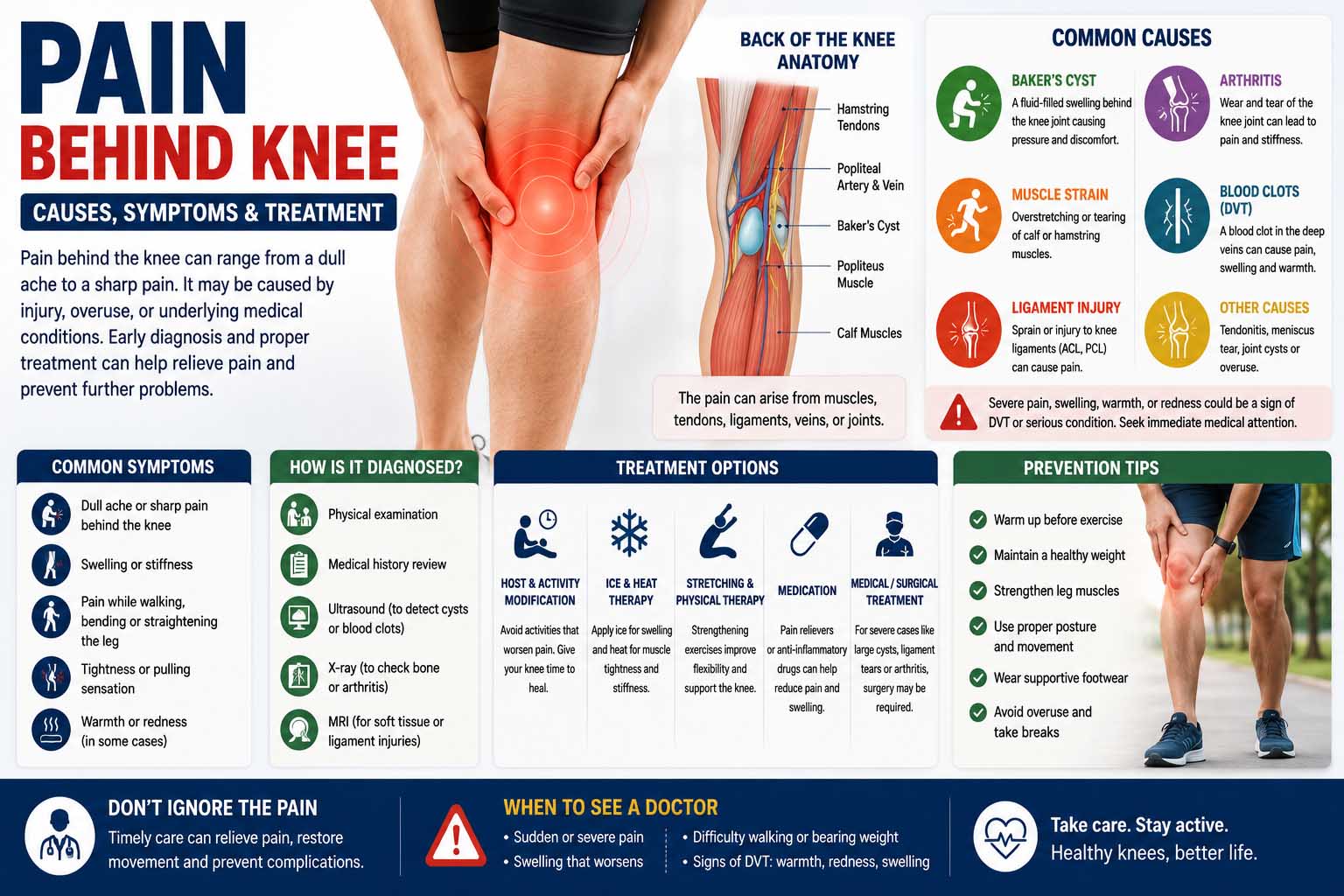
The back of the knee is a compact area where muscles, tendons, blood vessels, nerves, and the knee joint come together. Because several structures occupy this space, symptoms alone cannot always reveal the exact cause.
Still, understanding common patterns can help you decide whether simple home care is reasonable or whether you should seek medical evaluation.
What Does Pain Behind the Knee Feel Like?
Pain behind the knee can vary considerably depending on its cause. For instance, an overworked muscle may produce a pulling sensation, while joint inflammation may cause stiffness and aching.
Common symptoms include:
- Dull aching behind the knee
- Tightness when straightening the leg
- Sharp pain during movement
- Swelling or fullness behind the knee
- Tenderness around a tendon
- Stiffness after sitting
- Pain during running or walking
- Reduced knee movement
- Discomfort extending into the calf or thigh
The timing also offers useful clues. For example, pain that begins after exercise may have a different cause from unexplained swelling that develops without an obvious injury.
Likewise, symptoms that occur only during certain movements may suggest a mechanical or soft-tissue problem. Nevertheless, persistent symptoms need proper assessment rather than self-diagnosis based on location alone.
Common Causes of Pain Behind Knee
Several conditions can produce discomfort in the back of the knee. Some are relatively minor, while others need medical treatment.
Hamstring Strain
The hamstring muscles run along the back of the thigh, and their tendons attach around the knee. Consequently, a strain can sometimes cause discomfort near the back of the knee rather than higher in the thigh.
A hamstring injury may occur during sprinting, jumping, sudden acceleration, or overstretching. Usually, symptoms begin during or shortly after physical activity.
Mild strains may cause tenderness and tightness. In contrast, more significant injuries can cause sharp pain, bruising, swelling, and difficulty walking.
Strength exercises may eventually become part of rehabilitation. For example, understanding the benefits of deadlifts can be useful when considering posterior-chain strengthening, although someone recovering from knee or hamstring pain should not start or resume loaded exercises without ensuring they are appropriate for the injury.
Calf Muscle Strain
The gastrocnemius, one of the major calf muscles, crosses the knee joint. Therefore, a strain near its upper portion may be felt behind the knee.
This injury can occur during running, jumping, or sudden changes in direction.
Muscular pain often becomes more noticeable when pushing off the foot or stretching the calf. However, because calf pain and swelling can also occur with a blood clot, unexplained or significant symptoms should not automatically be treated as a muscle strain.
Baker’s Cyst
A Baker’s cyst, also known as a popliteal cyst, is a fluid-filled sac that develops behind the knee, often causing swelling, tightness, or discomfort in the area.
It commonly occurs when another knee problem causes excess joint fluid. For example, arthritis or certain knee injuries may contribute to its development.
A Baker’s cyst may cause:
- A noticeable lump or fullness
- Tightness behind the knee
- Aching
- Difficulty fully bending the knee
- Symptoms that worsen after activity
Some cysts cause few symptoms. However, a ruptured cyst can cause calf pain and swelling that may resemble a blood clot. Therefore, sudden calf symptoms require medical assessment rather than assuming a cyst has ruptured.
Arthritis Can Cause Behind the Knee Pain
Arthritis can produce pain, stiffness, swelling, and reduced movement throughout the knee. Although many people notice symptoms around the front or sides of the joint, behind the knee pain can occur as well.
Osteoarthritis becomes more common with age, although previous injuries and other factors can influence risk. Meanwhile, inflammatory forms of arthritis can affect the knee at different ages.
Symptoms may include stiffness after rest, swelling, reduced flexibility, and pain that changes with activity.
People managing arthritis often look at diet as part of their overall wellness routine. However, lists such as 12 foods to avoid with arthritis should be viewed in context: no single food causes or cures arthritis, and dietary changes should complement appropriate medical care rather than replace it.
If knee symptoms repeatedly interfere with everyday activities, a healthcare professional can help identify whether arthritis or another condition is responsible.
Tendon Pain Behind Knee
Tendon pain behind knee may involve structures associated with the hamstrings, calf, or other tissues around the joint.
Symptoms often become more noticeable during specific movements. For example, running, climbing stairs, bending the knee, or resisting certain leg movements may aggravate discomfort.
Unlike a major acute injury, some overuse-related tendon problems develop gradually. Therefore, a person may initially notice only mild discomfort after exercise before symptoms become more persistent.
Reducing aggravating activities temporarily may help. However, long-term recovery often involves gradually restoring strength and load tolerance rather than avoiding movement indefinitely.
A physical therapist can help determine which tendon or surrounding structure is involved and create an appropriate exercise plan.
Pain Behind Knee When Walking
Experiencing pain behind knee when walking does not point to one specific condition.
For instance, a minor muscle or tendon injury may hurt each time the leg extends. Meanwhile, arthritis may cause discomfort after longer periods of walking.
A Baker’s cyst can also create tightness as the knee bends and straightens. Likewise, meniscus or other joint problems may produce discomfort during weight-bearing activity.
Pay attention to whether the knee catches, locks, gives way, or becomes swollen. These details can help a healthcare professional narrow down possible causes.
Also notice how far you can walk before symptoms begin. If your walking tolerance is steadily decreasing or pain continues despite reducing aggravating activity, arrange an evaluation.
Could a Meniscus Injury Cause Pain in the Back of the Knee?
The menisci are cartilage structures inside the knee that help distribute load across the joint.
A meniscus injury can occur during twisting movements, particularly when the foot remains planted. Degenerative changes can also make the meniscus more vulnerable over time.
Depending on the location of the injury, pain may be felt around the joint line and sometimes toward the back of the knee.
Other possible symptoms include swelling, catching, clicking, or difficulty fully straightening the leg. However, clicking alone does not prove that a meniscus tear is present.
A clinician can assess the knee and decide whether imaging or specialist evaluation is necessary.
When Knee and Calf Pain Could Be a Blood Clot
One potentially serious cause of pain around the back of the knee or calf is deep vein thrombosis (DVT).
A DVT occurs when a blood clot forms in a deep vein, commonly in the leg. Symptoms can include swelling, pain or tenderness, warmth, and skin discoloration, although some people have few noticeable symptoms. The Centers for Disease Control and Prevention’s guidance on blood clots also notes that DVT requires prompt medical attention and that a clot that travels to the lungs can cause a pulmonary embolism.
Risk can be higher in certain situations, such as prolonged immobility, recent surgery, hospitalization, some medical conditions, pregnancy and the postpartum period, estrogen-containing medicines, or a previous history of blood clots.
Seek prompt medical attention for unexplained one-sided leg swelling or pain, particularly when risk factors are present.
If leg symptoms occur with sudden shortness of breath, chest pain, coughing up blood, fainting, or severe breathing difficulty, seek emergency medical care because a clot can travel to the lungs.
Do not try to diagnose a possible blood clot through home exercises. DVT and pulmonary embolism require medical testing for diagnosis.
How Doctors Diagnose Pain Behind Knee
Diagnosis usually starts with questions about when the symptoms began and what you were doing at the time.
A healthcare professional may ask whether you recently increased your exercise, twisted your knee, experienced an impact, traveled for a long period, or had surgery.
Next, they may examine swelling, tenderness, range of motion, stability, muscle strength, and how you walk.
Depending on the suspected cause, imaging may be useful. For instance, X-rays can show certain bone and joint changes, while ultrasound can evaluate some soft tissues and blood vessels. MRI may be considered when detailed images of internal knee structures are needed.
However, not every case requires imaging. The appropriate tests depend on your history, examination, and warning signs.
Home Care for Mild Musculoskeletal Knee Pain
If discomfort followed ordinary physical activity, remains mild, and there are no concerning symptoms, short-term home care may be reasonable.
First, reduce activities that clearly worsen the pain. However, unless advised otherwise, complete inactivity is usually unnecessary for a minor strain.
Cold packs may help with discomfort after a recent injury. Wrap the pack in a cloth rather than applying ice directly to your skin.
Meanwhile, gentle movement within a comfortable range can help prevent unnecessary stiffness.
Over-the-counter pain medicines may be suitable for some people. However, medical conditions, pregnancy, allergies, and medication interactions can affect which products are safe. Therefore, follow label directions and ask a pharmacist or healthcare professional if you are unsure.
Returning to Exercise Without Re-Irritating the Knee
Once pain improves, return to exercise gradually.
Start below your previous intensity rather than immediately repeating the workout that triggered the symptoms. Then, increase duration, resistance, or speed progressively as your knee tolerates it.
High-impact activities place different demands on the legs. For instance, the benefits of jumping rope may make it appealing for cardiovascular exercise and coordination, yet repeated jumping may be inappropriate while knee pain is active.
Instead, choose activities that do not noticeably increase symptoms during or after exercise.
Strengthening the hips, thighs, hamstrings, and calves can also support overall lower-body function. However, the right exercises depend on the cause of the pain.
If you repeatedly experience symptoms whenever you increase activity, a physical therapist or qualified healthcare professional can help identify training or movement factors that may be contributing.
When Should You See a Healthcare Professional?
Arrange medical assessment if your knee pain is persistent, recurrent, worsening, or limiting normal activities.
You should also seek medical advice for:
- Significant or increasing swelling
- Inability to bear weight normally
- A knee that repeatedly locks or gives way
- Marked redness or warmth
- Fever with a swollen or painful joint
- Pain following a significant injury
- Persistent unexplained pain
- A new lump or swelling behind the knee
Meanwhile, unexplained one-sided calf swelling, warmth, or tenderness requires prompt attention because DVT needs to be ruled out.
Emergency symptoms such as chest pain, severe breathing difficulty, fainting, or coughing up blood require immediate care.
FAQs About Pain Behind Knee
Why Does the Back of My Knee Hurt Without an Injury?
Possible causes include arthritis, a Baker’s cyst, tendon irritation, or other musculoskeletal conditions. However, unexplained pain and swelling can sometimes have more serious causes, so persistent symptoms should be evaluated.
Can Poor Sitting Posture Cause Pain Behind the Knee?
Prolonged sitting may contribute to stiffness or discomfort. More seriously, long periods of immobility can increase blood-clot risk in susceptible people. Therefore, unexplained one-sided swelling or significant calf pain should receive medical attention.
Is Walking Good for Pain Behind the Knee?
It depends on the cause. Gentle walking may be appropriate for some mild musculoskeletal problems, while certain injuries may need temporary activity modification. Stop and seek advice if walking significantly worsens symptoms.
Can a Baker’s Cyst Go Away?
Some Baker’s cysts improve, particularly when the underlying knee problem is addressed. However, persistent, painful, or recurrent swelling should be assessed by a healthcare professional.
Should I Stretch the Back of My Knee?
Gentle stretching may help certain muscle-related problems, but stretching is not suitable for every cause. Avoid forcing a painful stretch, particularly after an acute injury or when the source of pain is uncertain.
Use the Symptoms Around the Pain as Your Guide
Most pain behind knee problems have a musculoskeletal explanation, particularly when symptoms begin after exercise, repetitive activity, or a minor strain. Even so, the area contains more than muscles and tendons, so location alone cannot provide a diagnosis.
Pay attention to swelling, warmth, instability, locking, calf symptoms, and how the pain responds to movement. Then, modify aggravating activity while monitoring mild symptoms.
If the discomfort persists, worsens, or affects normal walking, seek professional assessment. Meanwhile, unexplained one-sided leg swelling or pain associated with breathing or chest symptoms deserves urgent medical attention rather than home treatment.